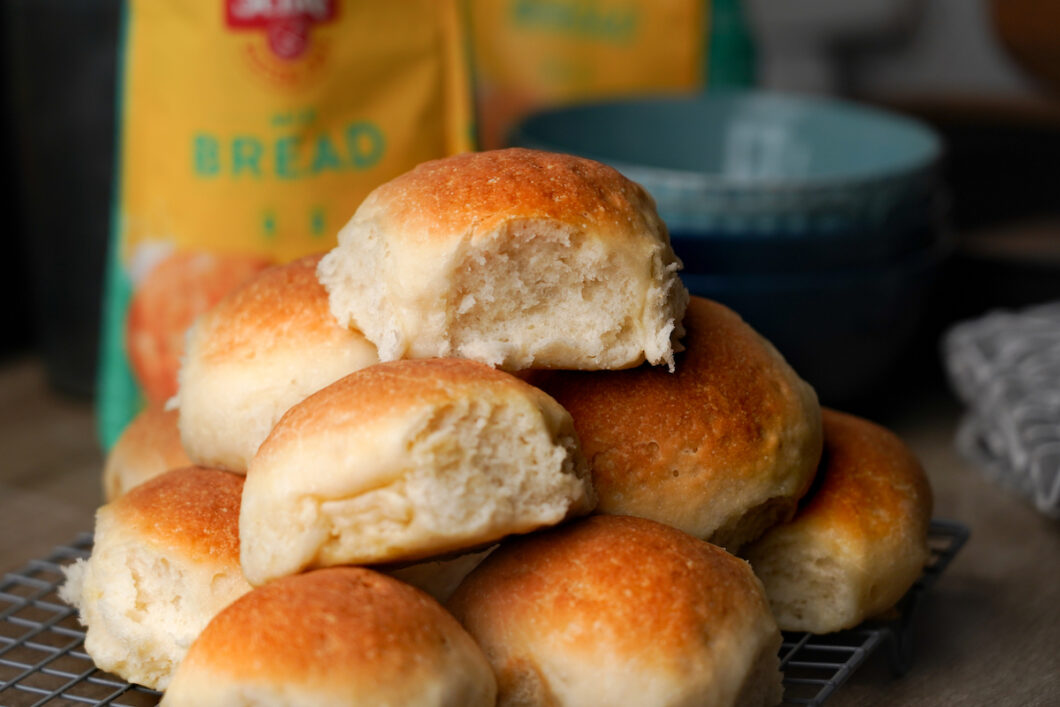
A gluten-free diet constantly forces you to learn more and try some new recipes. Bread and all other pastries are the biggest challenges when it comes to gluten-free cuisine. No matter how much experience and knowledge you have, some things can always go wrong. I always thought that the only important thing is that the dough just grows and grows in order to be as tasty as possible, and now I am increasingly realizing that there are many other parameters that must be met in order for that one bun to be perfect.
First of all, it is important to know how your gluten-free flour behaves when making the dough because not all flours are the same, especially the gluten-free ones. I have been using Schar Mix B flour for years and although Schar offers 5 more different types of flour, still none of them has managed to take the number one place – Mix B leads convincingly.
I recently started making the pastries with vegetable milk before baking and what I noticed is that the crust becomes soft and does not separate from the rest of the bread. In translation, there is less chance of a hole in the bread. This is exactly the biggest difference in relation to classic pastries – the use of milk. I put the milk in the dough and on top, and thus I get the proven softness of the inside, but also the crust. See how the recipe goes in detail below, and through a short video, you can get a sense of what the phases of the dough are, what density and structure are needed for one loaf or in this case a bun to be as successful as possible.

Put water, milk, sugar and yeast in a bowl. Stir and allow the yeast to activate.
When the yeast is activated, add baking powder, salt, oil and 500g of flour. You will add the remaining 80g when you knead the dough with your hands. Stir with an electric mixer or blender until all the lumps break.
When you get a smooth, sticky dough, sprinkle a little flour on the work surface, then transfer the dough to it. Add a little more flour and start kneading the dough gently with your hands in a circular motion. Add the flour until you have used up all 80g, then divide the dough into 10 equal parts and shape it into balls.
Arrange the balls on a baking tray lined with baking paper. Coat each ball first with soy milk and then with olive oil. Sprinkle a little sea salt on top if you want salty buns. Bake them for 20 minutes at 220ºC. Immediately transfer the baked buns to the cooling rack so that they do not evaporate in the hot pan. Keep them in a plastic bag for 2 to 3 days or freeze.